Intelektual Properties is a play and reflection on pseudo-calculated circumstances where a fashion brands success is based upon the choices of other fashion brands successes. Intelektual Prop follows and discusses fashion successes, follies, imitations, innovations, styles, trends and retail resurgences from a business standpoint. Essentially, what dictates a fashion brands staying power and why? Whether its couture or street fashion.
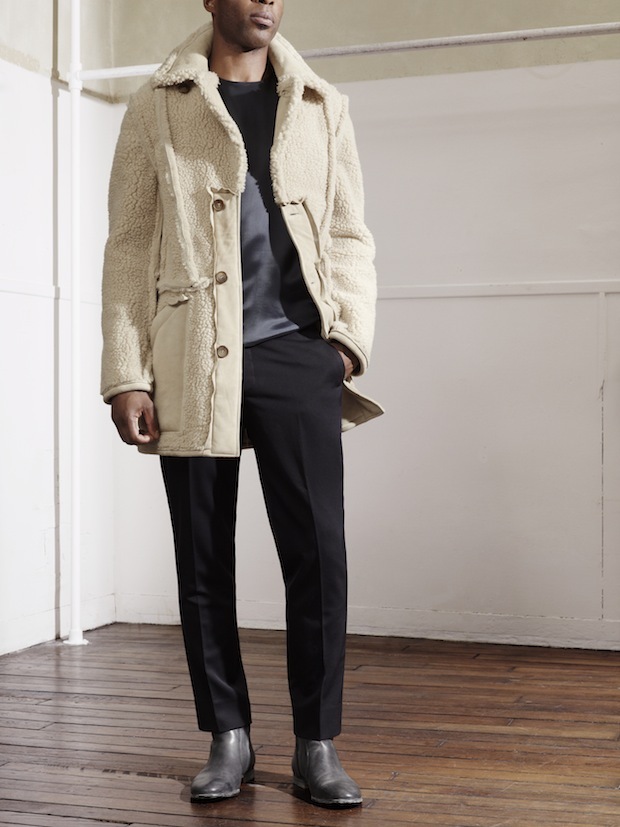
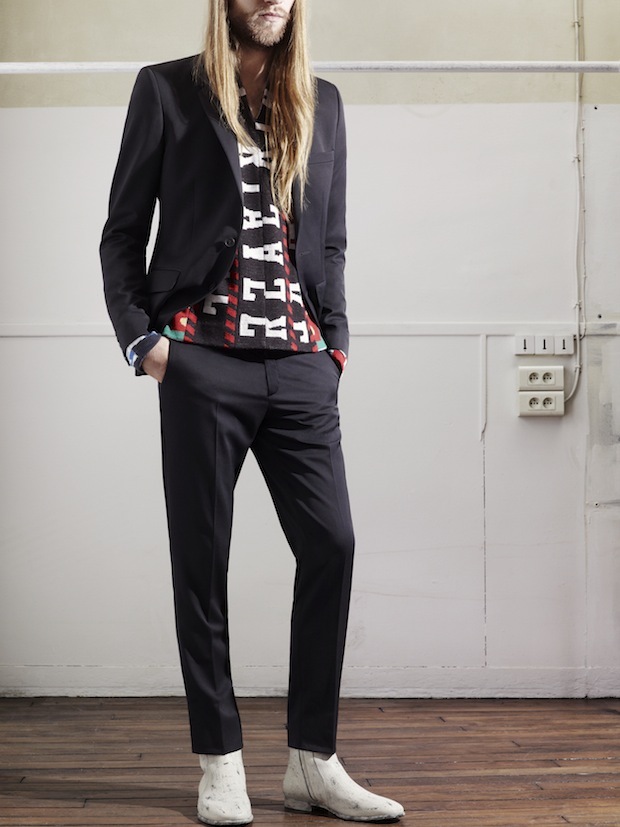
So the collaboration between Maison Martin Margiela and H&M is set to drop in November and I am wondering if I will wait in line for this collaboration like I did for the Versace for H&M collaboration. Some of the pieces look quite eccentric, at least for the ladies but the men's wear is contemporary enough for me dawn a few pieces.
Here, I have posted a couple of pieces I am interested in. Trying to get my grown and sexy on, with this sheep faux coat. The best thing I like about these collaboration is the garments are inexpensive, its affordable. Hopefully, there not a long line Roseville, like the one I had to stay in Orlando for. For whatever it is worth, I am on it.
For more information and a look at their woman's line click, here.
Coincidently,
staying on the topic of all things fashionable coming out of South Africa. By
means of a 419 blog I posted which was liked and reposted by someone who loves of Ghana, I happened
to tumble upon this hat designed by Laduma Ngxokolo, a dope South African textile designer. Laduma is embracing
traditional African patterns, inspired by the Xhosa culture and transcribing them onto knit ware,
creating his own contemporary culturally infused look. His patterns are
vibrant with color and dripping with an ethic flare and his process has him
winning all sorts of awards and design competitions.
It
seems like African inspired patterns is slowly but surely being embrace by the
fashionable mainstream and westernized worlds. Already we’ve seen an influx of
mud cloth accessories and garments in department stores such as Urbran
Outfitters. Not to mention, musician
such Jay-Z and Pusha T, Yasin Bey (Mos Def) embracing Afrocentric accra inspired high end street
ware brand like Ale et Ange, pronounced ah-LAY
ay ahnj, founded by
some African Americans (First generation Africans in America). Hat below.
Nonetheless,
the continent of Africa and its designers, are making room for themselves in
the fashion world, as they rightfully should. Traditional African attire has
always been colorful, vibrant and unique. I have been so lucky to be born within
a rich Nigerian culture, allowing me to be apart of textiles and patterns first
hand. Now all I am waiting for is full western embrace, more contemporary infusion
and longevity. I do not want this to be just the flavor of the month or season.
Check out this video of Laduma Ngxokolo speaking, at last years Design Indaba 2011. You can also check out his website.
I just appreciate how we can inspired and be inspired any and everything. Let our african history, roots, and culture, style be preserved and modernized to suit our fashionable taste.
On another tip, I do wonder, strictly, as a freelance marketer, master in business holder, future retail apparel entrepreneur; are these knit selling well in South Africa. What other markets is he in. I'm sweating just viewing his knit ware lines.
Apparently, it is never too late to step into the wonderful
world of fashion. Well, it is never too late to use your name for the sake of
fashion that is. Especially, if your name is one of the most recognizable names
around world but in this case it is the most recognizable prisoner number. In recent news, South Africa’s former
president Nelson Mandela will be debuting his clothing line at 46664 pronounced
‘four, double six, six four’ at New York fashion week. The number 46664 was
Nelson Mandela’s prisoner number when he was jailed on Robben Island, which is
off the coast Cape Town, South Africa in 1964. Now, he has decided to use it
for social change and awareness through fashion.
As I have grown older the thrills
and excitements for everything fashion has subsided a bit. Initially, I was all
about the label, brand and maybe even endorsements however, I have matured a
little in style. My maturity could be by default. Meaning, because of my own
personal recession brought on by being a full time student. I have now been
forced to change my spending habits. Therefore, until I get out of this
personal recession I will buy clothing apparel and shoes based on the price being
just right, other wise known as the “sale”. Furthermore, I am trying immerse
myself in the axiom that, “the clothes do not make man”. Instead, I want to be
the man that makes the clothes and sells them. Nevertheless, I still have my
days in which the occasional fashionable thrill may rear its hyped head.
Here, the fashion thrill comes
by way of the recent announcement that Swedish fast fashion company H&M holiday will be collaborating with high-end French fashion house Maison Martin Margiela. I love
the fashion pairing of low-priced fast fashion meets prestige and couture. On June 12th, Maison Martin
Margiela confirmed that they would be collaborating with H&M and releasing
the line November 15th, 2012 for the holiday shopping season.
In my last post I discussed the importance of a business
plan from two expert angles, Kevin Ryan founder of Gilt Groupe and Daymond John
founder of FUBU.I mentioned that I
found it ironic that two different men with two entirely different backgrounds both
became financially successful using different methodologies they learned from
their education or lack there of. As they progress in the business world their standpoints
or views on writing and reviewing business plans changed. I stated that I had agreed
with their take and opinions but it seems it is best to find some sort of
middle ground. I came down to the conclusion that it is best to write up a
business plan but also it is best to know your market.
Kevin Ryan is the founder and CEO of Gilt Groupe, a fancy, one stop internet shop that offers over 3.5 million members elegant merchandise,
stylish fashions, home decor, delicatessen food. They also have Jetsetter.com that offers discounted but luxurious travel to places like treehouse hotels in Kenya or iceberg hotels in Europe and activities like white water rafting in the Colorado. He is
an angel investor in Theladders.com. Not to mention, the founder of a network of affiliated Internet companies, one of which is
The business Insider under the AlleyCorp and he is the chairman. Kevin is a Yale graduate and has a MBA from INSEAD. Given
his economic and business mindset Kevin Furthermore, he doesn’t particularly
believe in writing business plan and for good reason. He acknowledges his way of
thinking is flipped. Kevin basically feels if you know your business or market
you do not need to develop a business plan for it. Kevin Ryan further explains that everybody
has an idea, so it is about your execution of the idea that creates success. Essentially nothing is new under the sun. He explains before Google exploded on the Internet search engine front there were several
other search engines. They had to execute that idea differently. Kevin likes to focus on the employee development and the
constant execution of idea. If the execution of an idea needs to be modified
then modify it. He feels it’s about recognizing that you have a good idea; whether is
it a specific enough market and having good people behind you. He eschews
business plans that just focus on the financials and fails to tackle the in
outs of the specific market.
In 2000, Greg Selkoe, a young Bostonian with an
undergraduate degree from Rollins College in Winter Park, Florida, launches an
online streetwear store named Karmaloop.com amidst the dot.com bust but
survives the crisis in epic fashion (pun intended). The Karmaloop hype is based upon the company striving to bring their consumers
a plethora of the freshest, trendiest streetwear brands and styles. A decade
and some change later, the company has grown tremendously. According to
Alexa.com, Karmaloop has over 4.5 million unique visitors monthly and is ranked
the 1,450th most visited website in the US.
As I pursue an entrepreneurial dream to open a retail
boutique somewhere in California I often contemplate, strategize and
methodically plan ideas in which to incorporate technology into the business
idea in order to generate a buzz or I guess "disrupt fashion". Here, I am
thinking about web 3.0, phone apps and interactive website/blog. However, I may
have been thinking too small based on what I recently read on Forbes online.
My first ever and only Uniqlo shirt was sent to me as a gift
about a year ago from one of my closet friends who is currently living and
teaching English to Japanese children. The shirt was a large Yellow crew neck
t-shirt that had a The Freedom Rider printed on it. Even though I appreciated
the gift but it took me a year before I even wore it. I had never heard of
Uniqlo nor had I seen any storefronts at the time (There are only three stores
in the U.S. all in New York). When I finally revisited the T-shirt I realized
that I had a Uniqlo shirt in my possession this whole time. My friend knew my taste well before I did
apparently. In the past year have come to favor this brand that I can hardly
get my hands unless I ask my friend in Japan to send me more gifts or I can shop through their online store, although I prefer a gift. When I
finally decided to wear the shirt, took the tags off and fell in like with this
brand even more. There were two tags one with the color, sku number, UPC and
size. The other tag was a Blue Note Records folded informational leaflet. The
shirt in my possession was paying homage to a selection of Blue Note Records
best designs. In this case, The Freedom Rider is the title of a Jazz Album
composed of artist Art Blakely & The Jazz Messengers, an influential Jazz
group. At that point, Uniqlo made me a fan. Although they are a fast fashion
company they slow down just enough to pay homage a to jazz band. I found that to be an admirable quality in
clothing company.
I recently read yet another article discussing the “fast
fashion” boom within the world and how fast fashion companies have double their
global footprint. However, this Reuters’
article written by consumer retail reporter Nivedita Bhattacharjee, Analysis: Retailers play catch-up in fashion speed race, goes more in depth on the tactics and strategies of the
fast fashion company.
Methods of retail fashion
distributions are changing amidst fast fashion competitors. Traditional fashion retailers now have to
play catch up to Europe and Japanese based retailers that are either cheaper,
trendier or both. Essentially, companies
such as the Gap Inc., American Eagle Outfitters and Macy's Inc. now have to
place smaller orders in more factories in order to have a quick turnaround in
order to get new designs and colors to the cheap, picky, young shopper faster.
Decided
to listen to Gordon P. Firemark, Esq.’s Entertainment Law Podcast Update in
order to beef up on my intellectual and legal knowledge. During the podcast one case truly stood out. Although the entertainment podcast was riddled with juicy and informative legal
talk dealing with music licensing, video game combat helicopters, Velvet Underground vs Andy Warhol's Banana and copyright protection. However, it was the
discussion of the U.S. Supreme Court’s decision on Golan v. Holder and the precedence it sets for future copyright
cases that raised my eyebrows. So I took it upon myself to brush up on this
case.
If
you have not read my previous blog post then you may not know that I have a certain
kind of disdain for trademark infringers, counterfeiters and bootleggers who purposefully copy and exploit another company’s brand without visually applying some kind of satiric artful
meaning behind their brand, a la Andy Warhol style.
Learning
the elements of trademark infringement and copyright laws is ever so important and given my own dreams and aspirations in fashion, entertainment and
law it behooves me to stay current on the rules and regulations that could hurt
my brand by creating a legal liability.
Ever
since the Lanham Act and Trademark
Counterfeiting Act of 1984 trademark infringement has been a useful
weapon in the fight against counterfeiters, counterfeiting channels and those
who choose to infringe upon or dilute another company's brand. There have been a few
seminal cases within the fashion industry in recent months that may affect my future
endeavors. Three examples of current trademark infringement court cases within
the apparel industry is the Navajo
Nation, The et al v. Urban Outfitters, Inc. et al, Louis Vuitton Malletier, S.A. v. Akanoc Solutions, Inc., and Christian Louboutin v. Yves Saint Laurent America.
As an artist in this day and technical age it is important
that you have some sort of leverage in order to protect your brand and pockets
from record companies. Too many young artists are taken advantage of
financially because they failed to read the contract that is presented in front
of them; they are too anxious to be signed.
Artists feel that this is a once in a lifetime deal, whether it is
signing with that record company or manager who claim they can make them a star
overnight. Next thing you know the
record company or even your manager owns everything you create. This is why I appreciate the business minded
the artist who recognizes their self-worth or who has enough patience,
foresight and intuition to secure a deal that is beneficial to him or her.
Typically, when
a urban street wear apparel brand is starting up or even recently, establish couture brands, still
trying to keep it street and capture the essence of its the grassroots, they
proceed to open up a pop up shop. Hoping to make a name for themselves; add a
little hype to their growing brand, capture some foot traffic, get rid of
surplus inventory all to generate income. The concept of a pop up shop is
pretty cool if you ask me because if you do not know by now I am sale kind of
guy. A pop up shop is essentially clever
gorilla marketing at is best. However, a
pop up mall? That is the best thing since slice bread for a street wear sale
connoisseur such as myself.
So
I recently read Urban Outfitters (URBN.O) was a little down on its luck. According
to Bloomberg, their shares are down 27 percent this
year, the largest drop among U.S. specialty apparel retailers. Gasp! Will
URBN be able to rebound from their recent decline in sales? I personally believe they can if they do
these three little things. Hire new talent, collaborate, and stay clear of the
Ambercrombiesque type publicity (diversify). As Jezebel noted, their board
members are old, averaging around 50 and are predominately White men, who may be
slightly behind the trends I’m guessing, a pinch maybe. Let’s face it, URBN.O CEO Richard Hayne, is no longer hip or a hippie
nor is he an Urban Outfitter but a multi-billionaire, ‘mom and apple pie conservative’. The company is slowly reflecting their company president's political
affiliation. Urban Outfitter may be losing their cool. You're not cool if your
insensitive to Native Americans, steals designers' jewelry concepts, your boardroom is not diverse and you do not
support Gay rights. Miley Cyrus is not a fan.
I
was perusing through a couple of TED speeches and stumble upon Johanna Blakley:
Lessons from fashions free culture. Johanna Blakley
studies the influence of mass media and entertainment on our world. The speech was corky and a full of sarcasm but I also found it to be quite profound and informative. Her breakdown of trademark infringement,
and copyright protection was simple to grasp and engaging. Apparently, fashionapparel
is too utilitarian to be protected. Hmm, fancy that. However, in spite of the axiom, “without
ownership there is no incentive to innovate”but fashion has found a way to evolve,
doesn’t
fashion kind of sound likethis?
Piracy,
counterfeiting or bootlegging can be an annoying eyesore and headache in
fashion retailing. Growing up, working as a urban clothing sales associate or
as a sneaker head, urban fashionista or a plain old brand loyalist, I often
despised the consumer who participated in the purchasing of fake apparel because these consumers adamantly believe that the product that they were
wearing was not a fake. Sorry, but you have been hoodwinked and bamboozled. I
understand the feeling of wanting to belong or don the latest fashions. It
feels good to be in the ‘in crowd' sometimes, doesn’t it? However, I am not always a fan of the, 'fake it
till you make it' plan. In some regards, I am purest when it comes to fashion,
sneakers and style. If I can afford brand, I will purchase the brand. If I
cannot afford it then I can wait till I can afford it but never will I wear
pirated or counterfeit shoes or apparel because I can be a clothing snob or brand slave at times. Not to mention, I may be fooling others but I am not fooling myself.
To assist apparel and footwear companies in fighting the good fight against counterfeiters, the
American Apparel and Footwear Association (AAFA), provides members and visitors
a like with an anti-counterfeiting coalition issue tool kit. In conjunction
with the Coalition Against Counterfeiting and Piracy (CACP) of which AAFA is an
active member, released recommended steps companies can use in order to protect
their supply chains from counterfeiters. As mentioned on AAFA’s webpage, CACP
partnered with U.S. Chamber of Commerce and provided companies with a tool kit
that, “[C]ontains best practice[sic] guidelines and seven case studies of
companies that devised and implemented aggressive techniques to fight
counterfeiting and piracy and protects themselves and their customers”.
As
I get ready to watch tonight’s episode of the HBO’s series, "How to make it in America," I start to contemplate about fashionistas, hipsters, style,
entrepreneurship and of course jeans. Especially, since I recently bought a pair of
Diesels and Replays. I love Italian denim and I will admit, I can be
somewhat of a jean snob but with a cheap conscious of course, which allows me
to sniff out the sales. Anyway, I digress, How
to make it in America; a story about two young gentlemen who risk it all to start their own jean company, inspires me to want to create my own brand of jeans
just for the love of a good pair of denim with my name on it.
Since Levi Strauss & Co.'s gave birth to the jean in the mid 1800’s, jeans have
transformed and transpired throughout the generations. No longer do cowboys and
gold miners roam the Wild West carrying saddlebags and wearing dusty denim with
patented copper rivets reinforcing the points of strain, touting a Colt 45
pistol, riding horse back. Those days are long gone. Now teens and young adults
are wearing all types of rinses, washes, whiskers, distressed, slim, selvedge, baggy,
relaxed, straight and skinny. Whether functional or fashionable the seamless
design of the jean has evolved. Not surprisingly Levi Strauss & Co.'s original
and the first jean, the 501’s denim jeans are stills a staple in the industry.
Furthermore, they have plenty of competitors with a market that is flooded with
every designer’s own brand of denim jeans from the bargain bin to haute couture.
Out of that flood I have found a few favorites, one in particular is the denim
brand Prps.
Prps
was founded in 2002, in New York by Donwan Harrell, a former Nike designers and
founder of the urban clothing line Akademiks. The jeans are
manufactured in Japan. The denim is woven from African cotton on vintage 1960’s
Levi’s looms. Since its inception in 2002, Prps have been a staple among the jean
snobs who love luxury jeans from the fashionable elitist to athletes, actors
and actresses. The first pair of Prps jeans I
ever bought was quite comfortable, stylish, and soft but had an expensive price
tag. However, once again, I got it for cheap because I happen to be working for
the urban clothing store, Up Against the Wall and their employee discount for a
manager at the time was gracious. The starting price for a pair of Prps can be $180 and up
but their jeans cost typically average around $400.
Honestly, I like jeans that are strong in material, look fresh, fit well, have crazy rinses and have a nice cut. I kept my pair for a good six years
until I gave them to my little cousin and he still wears them. Prps’s denim; have nice cuts, fresh rinses and
the denim is amazingly soft, must be that African cotton or something. Furthermore, I love
Prps website, www.prpsgoods.com, their interface is rather dope. I feel like unwrapping personal messages
to me that say, "Bruised, never broken…our jeans evolve with you". Believe it or not they almost feel like they do.